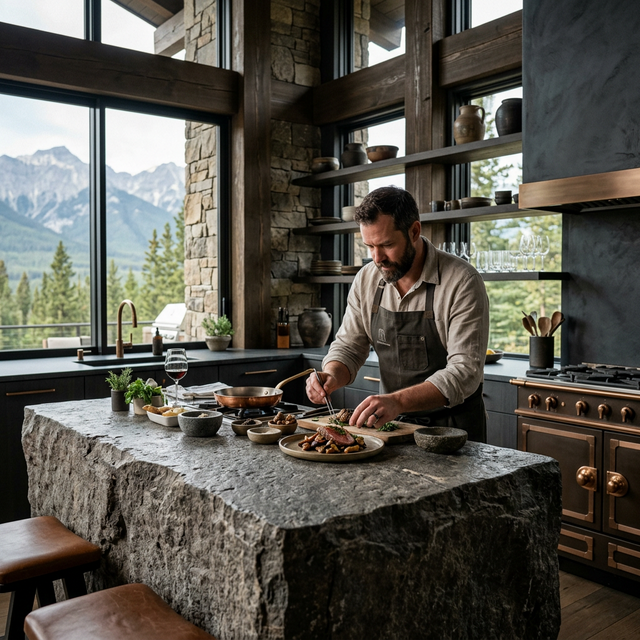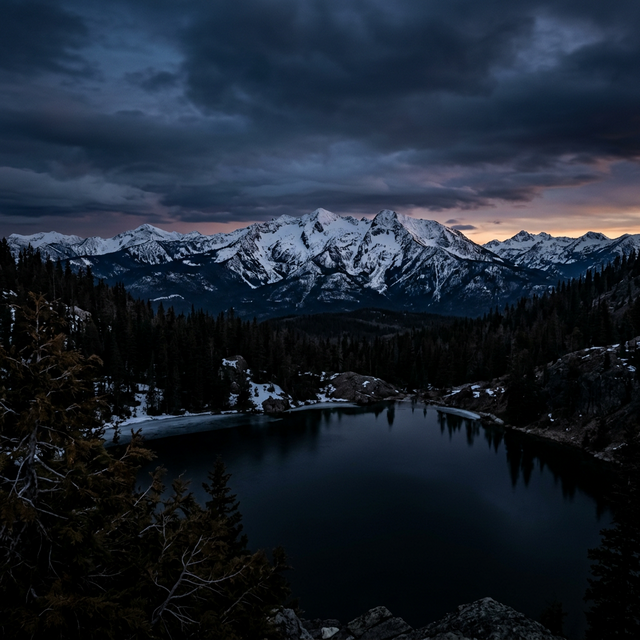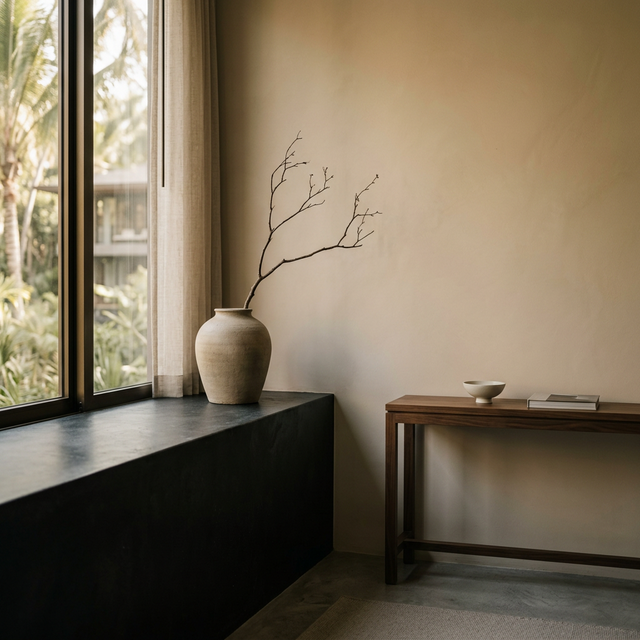
We did not come to Whitefish Mountain Resort to build houses. We came with a singular intent: to construct a sanctuary. The architectural ethos of Powder Peak diverges sharply from traditional, often cluttered "Rocky Mountain Lodge" typologies. Instead, it relies on an extreme form of contextual minimalism—a design language heavily influenced by the defining principles of wabi-sabi and refined ultra-luxury aesthetics.
In an increasingly demanding and noisy world, true luxury is no longer defined by ostentation or sheer square footage. It is defined by silence, space, and a profound, seamless integration with the natural environment. To achieve this, Powder Peak was designed to feel less like an intervention on the mountainside and more like a massive, naturally occurring geological formation that happens to be habitable.
The Philosophy of Quiet Luxury
The cornerstone of the Powder Peak design language is intentional restraint. The architecture is characterized by monumental scale and hyper-minimalist lines that defer entirely to the surrounding environment of Glacier National Park and the Flathead Valley. The visual noise that typically plagues luxury developments—intricate trim, extraneous materials, and competitive design elements—has been aggressively stripped away.
What remains is a pure, uncompromised structural expression. The exterior palettes pull directly from the ecosystem in which they sit. We utilized extensive charred timber (shou sugi ban), which not only provides immense weather resistance against the brutal Montana winters but also grounds the structure in deep, light-absorbing textures.
"We did not build houses on the mountain. We built the mountain into the houses. To truly inhabit an alpine environment, the architecture must surrender its ego to the landscape."
This is paired with massive, raw steel beams that are intentionally designed to rust and patina with the annual snow cycles, creating a living facade that ages gracefully with the mountain. Finally, monumental stone, cut from regional quarries, anchors these floating architectural forms to the bedrock of Chair Two itself.
The Imperfection of Wabi-Sabi
Wabi-sabi is the Japanese philosophy of embracing the beauty of the imperfect, the impermanent, and the incomplete. At Powder Peak, this philosophy is not a decorative overlay, but a structural imperative. It manifests in the selection of materials that show the hand of the craftsman and the passage of time.
We rejected synthetically perfect, high-gloss finishes. Instead, the interiors feature hand-troweled plaster walls that catch the low winter light with subtle, organic irregularities. Dark, wide-plank oak floors are wire-brushed to expose the deep grain, providing a tactile connection beneath bare feet. The massive stone hearths—the psychological anchor of each residence—are rough-hewn and asymmetrical, celebrating the raw power of the material rather than trying to tame it.
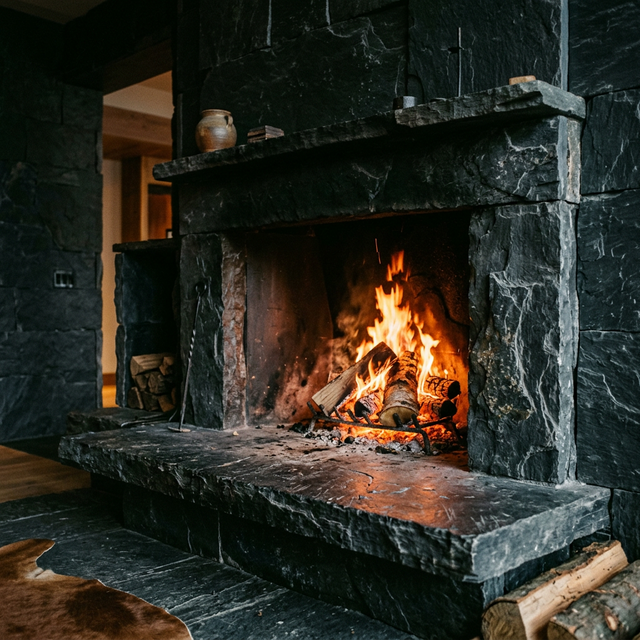
This embrace of organic imperfection creates a profound sense of warmth and psychological safety. It is a refuge that asks nothing of its inhabitants other than to be present in the moment. The architecture provides a quiet canvas; the shifting light of the Flathead Valley provides the art.
Blurring the Boundary Between Inside and Out
A core tenet of our design philosophy is the complete obliteration of the threshold between the interior refuge and the brutal beauty of the mountain outside. In traditional alpine architecture, windows act as picture frames. At Powder Peak, they act as the walls themselves.
Wall-to-wall, floor-to-ceiling multi-slide glass systems dominate the primary living spaces. These massive kinetic walls are engineered to withstand extreme cyclonic wind loads and sub-zero temperatures, yet they can be operated with a single finger. When fully retracted, the living room simply ceases to exist as an enclosed space, merging entirely with the deep, cantilevered mountain terraces. When you are seated at the hearth, the snow-ghosts of Chair Two feel inextricably connected to your living space.
The Choreography of Light
Architecture in a northern latitude must act as a precise instrument for capturing and manipulating light. Our design teams spent months studying the movement of the sun across the Flathead Valley through all four seasons. Every angle, overhang, and aperture was calculated to manage this profound natural resource.
During the deep winter months, the low-angled sun is invited deep into the thermal mass of the interior stone floors, providing passive, radiant warmth. The eaves are precisely calibrated to block the harsh glare of the summer sun, keeping the interiors naturally cool without relying entirely on mechanical systems. More importantly, the architecture is engineered to capture the famous alpenglow—the period just before sunset when the high peaks of Glacier National Park reflect a vivid, bruised violet light.
When this light floods the minimalist, wabi-sabi interiors of Powder Peak, the effect is transcendent. The dark, tactile materials absorb the color, suffusing the entire residence in a soft, surreal warmth. It is in these quiet, cinematic moments that the true value of the Powder Peak aesthetic is realized. It is not merely a place to live; it is a masterclass in living deeply connected to the alpine environment.