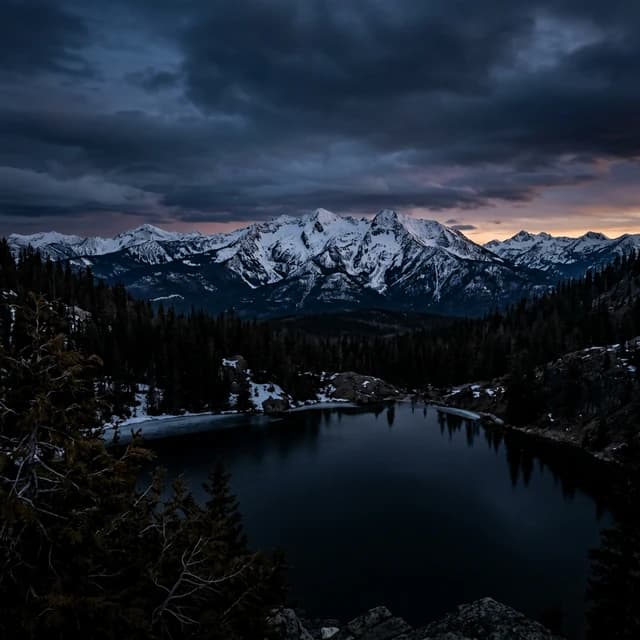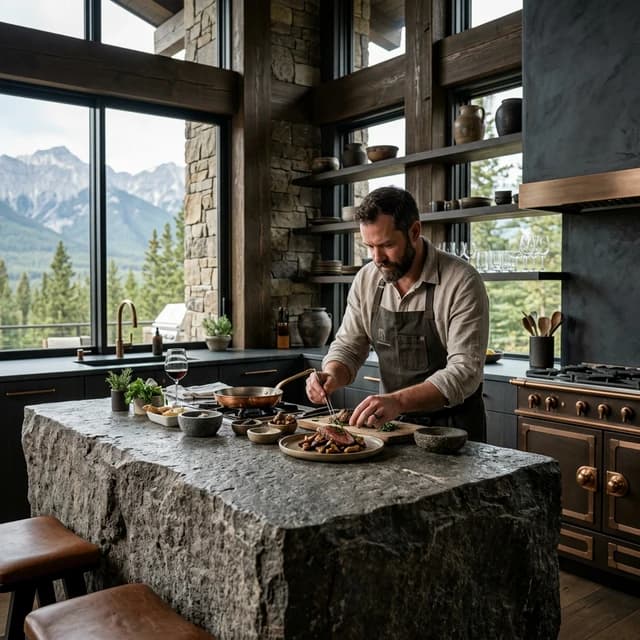
The conventional vocabulary of mountain luxury real estate is exhausted. The clichéd accumulation of heavy logs, ornate river rock fireplaces, and complex, visually noisy detailing has become an anachronism. True luxury architecture in the modern era demands discipline, a severe curation of materials, and a profound reverence for the surrounding environment.
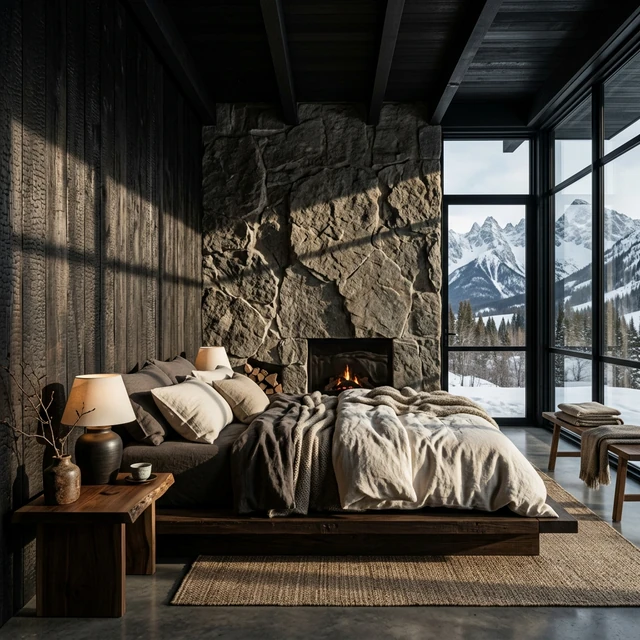
Powder Peak, situated on the slopes of Whitefish Mountain Resort, represents a total rejection of the traditional "alpine lodge." Instead, it embraces an aesthetic heavily influenced by the philosophy of Wabi-Sabi and the hyper-refined, minimalist interiors popularized by Ultra-luxury Resorts. It is a tactile sanctuary—an environment designed not merely to look luxurious, but to feel profoundly grounded and quietly monumental.
The Power of Restraint
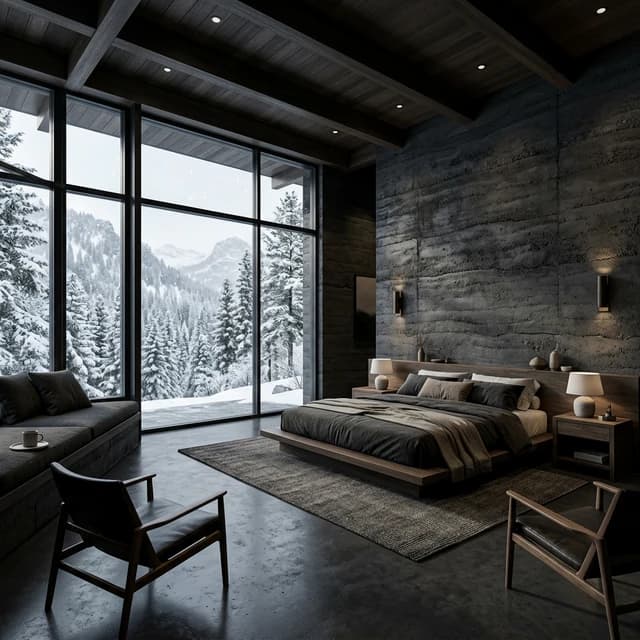
At the core of the Powder Peak design ethos is a commitment to restraint. The interiors are defined by vast, unbroken planes and dramatic, clean lines. By eliminating superfluous ornamentation, the architecture forces the focus outward to the raw beauty of the Montana winter, and inward to the intrinsic quality of the materials themselves.
These are spaces that command silence. The monumental scale of the living areas, characterized by towering ceilings and floor-to-ceiling multi-slide glass, is purposefully counterbalanced by a dark, moody palette. This creates a deeply comforting, womb-like atmosphere that acts as a profound refuge from the intense light and cold of the alpine environment.
Charred Timber and the Shou Sugi Ban Tradition
The exterior cladding and select interior elements of Powder Peak utilize the ancient Japanese technique of Shou Sugi Ban—the deep, controlled charring of cedar or cypress.
This process not only renders the wood highly resistant to fire, rot, and the relentless freeze-thaw cycles of the Flathead Valley, but it also creates a surface of incredible visual depth. The carbonized layer absorbs sunlight rather than reflecting it, producing a rich, textured matte black finish that shifts with the angle of the sun. It is a material that acknowledges the destructive power of nature while simultaneously transforming it into something enduring and beautiful.
Monumental Stone and Raw Steel
To anchor the structures against the mountain, the design team utilized massive slabs of regionally sourced stone. These are not decorative veneers, but structural elements that communicate permanence and geological weight. The stone is often left relatively raw, celebrating its natural fissures and irregularities—a direct homage to the Wabi-Sabi appreciation of imperfection.
Contrasting the organic warmth of the stone and timber are precise, razor-sharp interventions of raw steel. Utilized in massive fireplace surrounds, structural columns, and custom staircase detailing, the steel provides a necessary industrial tension. Over time, exposed to the humidity and climate of the region, the steel is designed to develop a rich, complex patina, further blurring the line between the built environment and the natural one.
The Invisible Mastery of Light
Perhaps the most crucial material at Powder Peak is the one that cannot be touched: light. The stark, minimalist architecture serves as a perfectly calibrated canvas for the dramatic solar cycles of Whitefish.
The deep, angled rooflines and precision placement of windows ensure that the brutal glare of the midday sun is mitigated, while the long, golden rays of the early morning and late afternoon are drawn deep into the living spaces. The interplay of this raking light across the textured surfaces of charred wood and raw stone creates a constantly shifting, cinematic atmosphere within the home.
A Sanctuary for the Senses
Powder Peak proves that true mountain luxury does not shout; it whispers. By adhering to a disciplined aesthetic of elemental materials and profound architectural restraint, these residences provide more than mere shelter on the ski hill. They offer a deeply tactile, emotionally resonant sanctuary—a masterclass in quiet luxury built for generations. Brokers and design partners can request the complete material and architectural portfolio through the Powder Peak broker portal.